
If you need help or me to buy and install these part, contact me at 805-456-9301.
While this article focuses on a potential problem with the Ram ProMaster, it’s not meant to suggest that ProMasters are any more problematic than Sprinters or Transits. All three vans have their own known issues, and I’ll cover some of the Sprinter and Transit problems in separate posts.
What’s important here is understanding how to extend the life of your ProMaster and reduce the chances of expensive transmission, headlight, and steering failures. A little preventive maintenance and awareness now could potentially save you $5,000–$10,000 in repairs later.

Read very carefully what Mike said in article RAM ProMaster Water Intrusion Equals Transmission Failures
And once it overflows, it goes straight and destroys the transmission and the headlight! We have been seeing many transmission failures due to water intrusion on Ram ProMaster vans equipped with the 62TE transmission. One customer that came in was on his second failed unit due to water intrusion, so this led us to do some additional research to determine how this had happened twice to the same vehicle when he had never driven in flood waters or anything of that nature.
Then read very carefully article Promaster: 7 Ways To Stop Cowl Leaks
Promaster’s leaky cowl is a known faulty design. Chrysler/Fiat refuse to acknowledge this issue and will not fix it under warranty. The dealer we talked to wouldn’t attempt to fix it even not under warranty. As owners, we are left to fend for ourselves, but we are getting pretty good at this fending-for-ourselves stuff!
Below are products and steps you should get to prevent water.
1) Van Nipples - See video Promasters Only brings you Van Nipples (Also why at it, get your Kip's Promaster nuts here). Nipples keep two bolts from corroding on your upper intake manifold, saving you much hassle and expense.


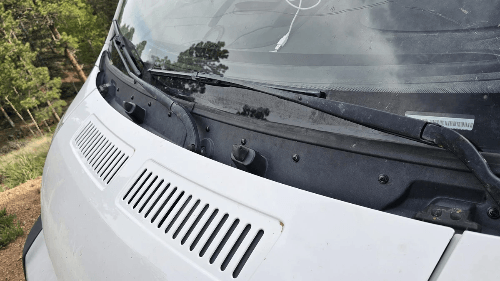
6. 4/26/2026 Update: Also to minimize engine damage due to water, check Kip's video on your Air Intake Hose. Seriously, this can turn into a blown engine!
7. 7/12/2026 Update: Promaster Power Steering Failure resulting from water cowl leak
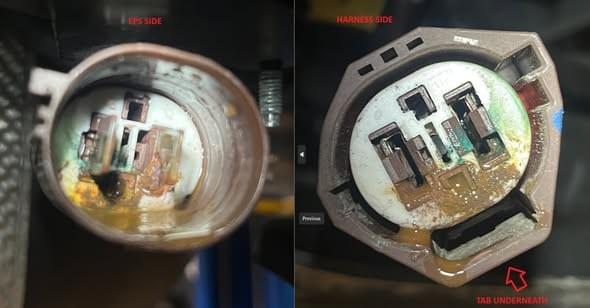
From Facebook: Hey Everyone, I hope this is OK. Just one year out without warranty on my Promaster, the dealership says the only non-liable fix for this is replace the Electronic power steering for a known issue they could have informed me when federal complaints were opened Based on the formal NHTSA Office of Defects Investigation timeline, Ram's parent company (Stellantis) had a strong inclination of this corrosion flaw by late 2023 to early 2024.
Obviously I had AI help me compile everything below, but it might save you trouble.
Urgent Warning for 2022+ Ram ProMaster Owners: Steering Failure & Battery Drain Prevention
If your van has not shown steering issues yet, acting now can prevent an unexpected, dangerous drop in power steering assist, stop a hidden battery killer, and protect you from an out-of-pocket $6,300 repair bill.
A widespread engineering defect in 2022–2025 Ram ProMaster vans is currently the subject of an active federal safety investigation by the NHTSA (Action Number: PE23-015). This technical breakdown outlines exactly how a hidden water leak slowly destroys your vehicle’s electronics, how to identify it early via chronic dead batteries, and how a basic weekend maintenance routine can save your steering gear permanently.
The Technical Anatomy of the Defect
The Hidden Water Route: Rainwater and snowmelt dropping from the lower windshield cowl run directly down the main Electronic Power Steering (EPS) wiring harness. Capillary action pulls this water past the factory plastic seals, causing standing liquid to pool inside the bottom floor of the main electrical connector housing.
The Constant Parasitic Battery Drain: The heavy 2-pin power connector on the EPS module is an un-switched "hot" line connected directly to the 12V battery. It carries continuous current 24/7, even when the key is out and the van is parked. When rainwater pools inside this live plug, it creates a physical, non-digital short-circuit bridge directly to the frame ground. This causes a heavy parasitic electrical draw that repeatedly drains your battery to zero volts if the vehicle sits for just a couple of weeks—a symptom that frequently starts during the very first month of ownership.
The Steering Assist Glitch: Over months of thermal cycling, this trapped moisture and continuous current loop generate aggressive copper oxidation (green galvanic corrosion) and micro-arcing on the connector blades. When you perform a rapid, high-torque maneuver—specifically quick, low-speed wheel movements while parking—the steering motor demands massive current. The corrosion acts as an electrical bottleneck, dropping voltage instantly below operational levels. The internal steering ECU registers this voltage spike as a hardware failure and cuts assist as a safety fail-safe, causing the steering wheel to suddenly pulse, catch, or jerk.
The Overhaul Cost Trap: Because the original factory design is fundamentally flawed, Ram completely superseded the replacement steering gear assembly with a redesigned, watertight housing. However, the new geometry renders your van's original factory inner and outer tie rods completely obsolete. If the module pins corrode severely, dealerships refuse to service the plug and mandate a complete steering rack replacement along with entirely new tie rod linkages to force compatibility, inflating out-of-pocket commercial repair bills to over $6,000.
Below is my plan in the interim until Dodge fixes this through goodwill replacement or offers another affordable solution. I am not recommending it because I am not a trained but the following would have prevented this altogether.
Proactive Prevention Checklist
1. Isolate the Power:
2. Navigate the Hidden Locks:
3. Break the Corrosion Crust and force moisture out with electronic cleaner
4. Apply the Dual-Layer Waterproof Shield:
The Electrical Contacts: Coat the interior metal pins and terminal slots with a high-quality, plastic-safe dielectric grease (such as Permatex 22058 or CRC Dielectric Grease). This thin layer allows direct metal-on-metal conduction while sealing the surface from oxygen and moisture.
The Plastic Housing Sleeve: Apply a layer of standard petroleum jelly (Vaseline) exclusively between the overlapping outer plastic walls of the male and female connector housings. This dense, hydrophobic grease fills the empty micro-gaps, completely blocking capillary rainwater from sneaking back into the plug, while keeping the plastic lubricated so it can be cleanly disconnected by a mechanic later.
How to Proactively Enforce the Federal Recall
If you pull your steering plugs apart and discover any standing water, green copper powder, or black arcing marks, you hold high-leverage data.
Take clear, well-lit digital photos of the corroded connections and immediately log a vehicle safety complaint at NHTSA.gov. Explicitly detail your mileage, the presence of pooled rainwater inside the sealed harness plug, and any associated history of chronic dead batteries or parasitic draws.
The federal government requires a verifiable wave of public data to upgrade its current preliminary evaluation into a legally mandated, nationwide recall campaign. Filing your photos and timeline helps force Ram corporate to absorb the financial responsibility of this engineering flaw, ensuring every affected owner receives updated, redesigned steering equipment completely free of charge.
8) Also watch video on Facebook here and caulk the two screws that hold the cowl down.
Other good videos below to watch!
From above article:
We have been seeing many transmission failures due to water intrusion on Ram ProMaster vans equipped with the 62TE transmission. One customer that came in was on his second failed unit due to water intrusion, so this led us to do some additional research to determine how this had happened twice to the same vehicle when he had never driven in flood waters or anything of that nature.
Out of the past six full-sized Ram ProMaster vans we have had in our shop, four of them have had water intrusion related failures. This is not caused by a failed radiator as the ProMaster only has an external transmission cooler. After looking over the vehicle and the design of the wiper cowl, online research revealed that water is entering the unit through the transmission vent cap, and/or the manual shaft bushing that is either worn or split. Three common issues are causing this to happen. The first major problem is that there is a large drain hose under the wiper cowl. This hose is often found knocked off with a loose clamp. (Figure 1)
Article Figure 1
Figure 1
I have also seen a few with the tubes missing altogether, leaving a large diameter drain that is pointed almost directly over the transmission vent cap/manual shaft. When water runs down the windshield it comes out of that drain and splashes into these areas causing a substantial amount of water to enter the unit over time.
The second common cause of the water intrusion is caused by the split in the wiper cowl itself; this is a two-piece cowl that has a foam strip in the center. This foam can wear down and fall out. When that happens, water drains down onto the top of the intake plenum. This causes water to puddle on the intake and water will run down the front; it can find its way down to the transmission vent / manual shaft when the rain is heavy.
The third most common problem is the drain tube for the wiper cowl is round at the top and then misshapen to oval at the bottom. (Figure 2)
Article Figure 2
Figure 2
If the customer parks in an area with tree limbs overhead, leaves and other tree debris can plug this drain. This causes the wiper cowl to fill up with water and this makes the split in the center of the cowl leak onto the intake plenum profusely.
When diagnosing these ProMaster vans, we are noticing multiple symptoms and codes. One had a shudder when the torque converter clutch was being applied; another slipped badly on take-off. One had no reverse at all. Also, we are seeing the PRNDL signals are sometimes erratic on the scan tool. They will show correct readings on the shifter assembly and the instrument cluster but will not read properly on the scanner. When we see these types of symptoms, we take a fluid sample out of the unit and get it ready to test.
We test the automatic transmission fluid by pouring it onto a hotplate looking for bubbles. The hotplate is set to 300°F, and once it is warmed up to the temperature, we pour the sample. When water is present the fluid will bubble and will make a crackling/popping sound. When you see this, you know it has water inside the fluid. Usually when we pull the pans to inspect, we can see a separation on the bottom of the pan where the water and oil have started to separate after sitting awhile. When these units fail from the water intrusion, we have noticed a few with large amounts of clutch debris in the external cooler. Many times, when we see this, there will be several little chunks of clutch material all over the spring and down inside the bore of the thermal bypass valve. This will need to be taken apart and cleaned very well. Also, if you do not have a good, heated reversing cooler flush machine, replacing the external cooler is strongly recommended due to how hard it is to get these little chunks of clutch out of the cooler.
Our solution to correct these water drainage issues is to remove the factory pinch clamp on the drain tube and replace it with a good aftermarket worm-gear clamp. When the tube is off, we blow compressed air through the tube to make sure there is no blockage in the drain that would cause a backup of water. If the foam strip in the middle of the cowl split is missing or completely worn out, we seal the seam with a good-quality black RTV silicone. Performing these actions seems to correct the issues that cause the water to enter the transmission. Now, whenever a ProMaster van comes into our shops for just regular services or a wellness checkup, we always check these cowls and drain and inform the customers of what can happen if this tube is ever left off.
On a side note, one last thing to mention on these vehicles is that when replacing/R&R these transmissions, it is required to change the bolts for the left side mount. These are single-use bolts and are not intended to be reused for safety reasons. TSB 23-022-19 states that 2014 through 2020 Ram ProMaster vehicles all require new bolts; this applies to all 1500, 2500, and 3500 models. Be sure to look up any that you are doing to see if newer years require the same bolts as the earlier models.
As it has been said, "An ounce of prevention is worth a pound of cure." Addressing manufacturer engineering mistakes before they cause expensive problems is a perfect way to add value to your customers' visit.